The Northeast got hit by another major storm over the weekend, particularly New England, where I live. Now, I'm no stranger to snow, having grown up in Buffalo, but it's rare to have multiple feet of snow around here, and we just aren't as prepared for it (plows, salt, etc.).
The rarity of snow is just fine with me, because I think snow is a huge pain! However, a big snowstorm does offer an opportunity to reflect on a few lessons for therapy, and life.
1) Be Prepared
The scouts' motto is good advice for snowstorms. If you're going to get snowed in, and possibly lose power, it's important to be prepared for it! You need food, flashlights, candles, blankets.... It's good advice when it comes to life, too. It's important to be prepared not only with the necessary supplies, but to be prepared mentally and emotionally, too. We tend to handle things more skillfully when we "cope ahead of time," priming ourselves with positive self-talk, rehearsing coping skills, and good self-care. We can also lessen the emotional impact of anticipated stressors through "stress inoculation," by incorporating the skills we want to use in an actual situation into role plays or visualizations of ourselves handling the stressor. Of course, we don't want to spend all our time trying to predict and plan for stressful situations, but when there are big stressors on the horizon, it pays to be prepared!
2) Take Some Downtime
If nothing else, snowstorms force us to stay put - we can't do much until the storm passes (especially when the Governor bans driving, the Mayor bans parking, and public transit shuts down). This forced downtime - what some might call "rest" - is actually something most of us would benefit from a little more of! It's good to take time to relax, unwind, destress, and catch up with ourselves. It might be just 10 or 20 minutes of a relaxation or mindfulness exercise, or it could be several hours to a day or more. We have more to give when we take time for self-care.
3) Work Together
Cleaning up from a snowstorm is a lot of work. If you have to do it yourself, it can be pretty overwhelming. But, when everyone pitches in, and neighbors help neighbors, it becomes more manageable, AND it creates an opportunity for human connection. Everyone feels more positively about their neighborhood when they feel connected to neighbors. It's a good metaphor for life: much of life can be overwhelming on your own, but becomes more manageable when people support and help each other. Plus, feeling connected to others is part of what makes life worth living.
4) Practice Radical Acceptance
There's not much any of us can do about Mother Nature, or the way a storm complicates our lives - especially when it comes to transportation. We can add to our suffering by refusing to accept reality, or we can accept that it is what it is. We don't have to like it, but we can still accept it as a fact. Instead of putting our energy into wishing things were different, we can say: "Ok, if this is how things are, what's my next step? Where can I go from here?"
We can also remember that the snow melts - "this, too, shall pass" - Spring will come (soon, if you believe the Groundhog), and the storm will be just a memory, and a story to tell when the next big storm rolls around!
A collection of reflections for those learning and practicing psychotherapy, and clinical social work more generally
Showing posts with label Coping. Show all posts
Monday, February 11, 2013
Thursday, January 17, 2013
The 3 C's of Stress Hardiness
The concept of “stress hardiness” was developed by Dr. Suzanne Kobasa, based on research that looked at many groups of people who have very stressful occupations. Those who seem to cope with their job stress - in other words, those who have a "hardiness" to it - seem to share three specific characteristics or personality traits. (Conveniently enough, all three begin with the letter C).

1) COMMITMENT:
People who are high in commitment feel like they are part of a larger purpose, They are therefore able to find meaning in their work, are fully involved in what they are doing and they give it their best effort. In this context, problems are more likely to be experienced as minor setbacks in the larger scheme of things, rather than major roadblocks to the work at hand.
2) CONTROL:
People who feel that they are in control believe that they can influence events and surroundings, that they can make things happen. They have a strong sense of self-efficacy and an internal locus of control versus feelings of powerlessness or feeling like a victim of circumstances. At the same time, they recognize what is beyond their control...and don't waste effort and angst trying to control those things. Instead, they stay focused on their purpose and intent, but are flexible when it comes to strategy, and will alter goals when necessary.
3) CHALLENGE:
Those who are susceptible to stress tend to perceive difficulties as threats, stress-hardy people perceive such difficulties as challenges. Instead of becoming defensive, they become curious, and begin to look for angles and ideas they may have missed. These people welcome new situations as opportunities to learn, to grow, and to develop on a personal level. As a result, they are able to turn difficulties to their advantage.
There is a fourth "C" that could be added to the list: CONNECTION. Social support plays a vital role in shielding people from the detrimental effects of stress. Those who are stress-hardy are able to turn to others for support when times are tough.
How do you see stress-hardiness? Do you agree with the C's? Is there anything you'd add to the list?

1) COMMITMENT:
People who are high in commitment feel like they are part of a larger purpose, They are therefore able to find meaning in their work, are fully involved in what they are doing and they give it their best effort. In this context, problems are more likely to be experienced as minor setbacks in the larger scheme of things, rather than major roadblocks to the work at hand.
2) CONTROL:
People who feel that they are in control believe that they can influence events and surroundings, that they can make things happen. They have a strong sense of self-efficacy and an internal locus of control versus feelings of powerlessness or feeling like a victim of circumstances. At the same time, they recognize what is beyond their control...and don't waste effort and angst trying to control those things. Instead, they stay focused on their purpose and intent, but are flexible when it comes to strategy, and will alter goals when necessary.
3) CHALLENGE:
Those who are susceptible to stress tend to perceive difficulties as threats, stress-hardy people perceive such difficulties as challenges. Instead of becoming defensive, they become curious, and begin to look for angles and ideas they may have missed. These people welcome new situations as opportunities to learn, to grow, and to develop on a personal level. As a result, they are able to turn difficulties to their advantage.
There is a fourth "C" that could be added to the list: CONNECTION. Social support plays a vital role in shielding people from the detrimental effects of stress. Those who are stress-hardy are able to turn to others for support when times are tough.
How do you see stress-hardiness? Do you agree with the C's? Is there anything you'd add to the list?
Thursday, October 11, 2012
2 Ways to Use Imagery
The human imagination is powerful. It allows us to learn without direct experience. It allows us to create and innovate. It entertains us, and gives us a safe escape from boredom or distress. In this last capacity, our imagination can be harnessed as a coping skill - a coping skill that can be done anytime, anywhere, with no special equipment. We call this skill imagery.
Just like imagination more generally, imagery has myriad applications and forms. However, I lump them into two main categories: self-soothing, and mastery.
1) Self-Soothing
Self-soothing imagery gives people a break from distressing real-life stimuli by temporarily replacing them with images that are relaxing, peaceful, calm, or otherwise preferable to the current situation. Most often, soothing imagery reflects one of three themes: nature (lakes, mountains, meadows, sea, sky, rain, wind, trees, plants, animals); places associated with positive memories (a childhood home, bed, porch, vacation spot, etc.); and images associated with positive attachment figures (e.g., parent, grandparent, partner, close friend). What kind of image people select depends on their personal circumstances (e.g., someone without positive attachments is more likely to choose images that do not include other people), the kind of distress and its trigger, and what images are easily accessible based on life experience, geography, etc.
Self-soothing imagery works by settling people down (mind and body) so that they can return to their current situations in a better frame of mind, better able to cope and respond rather than react.
2) Mastery
Self-soothing imagery increases effective coping indirectly, by quieting the distress that gets in the way of rational thinking and action. In contrast, mastery-based imagery seeks to increase coping more directly, by identifying and strengthening the responses most likely to lead to a desired outcome.
One common use of mastery-based imagery is in sports, when athletes visualize themselves performing flawlessly. The same idea applies to more routine life stressors: if people can identify a situation and their desired outcome, using imagery to picture that outcome unfolding (as it occurs, not only picturing the end result), primes people to actually act in ways that move them toward the desired outcome. When people are unsure of the most effective response, this kind of visualization also offers the opportunity to try out or rehearse various scenarios, helping people choose the best approach and fine-tune their response plan.
A specific application of master-based imagery is imaginal exposure, used as a therapeutic treatment for fear and anxiety. Drawing on effective treatments involving repeated exposure to feared stimuli to eliminate the fear response, researchers have established that simply imagining the feared stimuli can lead to reductions in fear and anxiety, and make it easier to face that stimuli in real life later on.
Whatever kind of imagery people choose, the most important aspect of the skill is to try visualizing the chosen image in as much detail as possible, drawing on as many of the 5 senses as possible. Include not only what the image looks like, but also what it sounds like, smells life, feels like, and tastes like. The more vivid the image, the more effective it will be.
What kind of imagery have you tried or used for yourself or clients?
Just like imagination more generally, imagery has myriad applications and forms. However, I lump them into two main categories: self-soothing, and mastery.
1) Self-Soothing
Self-soothing imagery gives people a break from distressing real-life stimuli by temporarily replacing them with images that are relaxing, peaceful, calm, or otherwise preferable to the current situation. Most often, soothing imagery reflects one of three themes: nature (lakes, mountains, meadows, sea, sky, rain, wind, trees, plants, animals); places associated with positive memories (a childhood home, bed, porch, vacation spot, etc.); and images associated with positive attachment figures (e.g., parent, grandparent, partner, close friend). What kind of image people select depends on their personal circumstances (e.g., someone without positive attachments is more likely to choose images that do not include other people), the kind of distress and its trigger, and what images are easily accessible based on life experience, geography, etc.Self-soothing imagery works by settling people down (mind and body) so that they can return to their current situations in a better frame of mind, better able to cope and respond rather than react.
2) Mastery
Self-soothing imagery increases effective coping indirectly, by quieting the distress that gets in the way of rational thinking and action. In contrast, mastery-based imagery seeks to increase coping more directly, by identifying and strengthening the responses most likely to lead to a desired outcome.
One common use of mastery-based imagery is in sports, when athletes visualize themselves performing flawlessly. The same idea applies to more routine life stressors: if people can identify a situation and their desired outcome, using imagery to picture that outcome unfolding (as it occurs, not only picturing the end result), primes people to actually act in ways that move them toward the desired outcome. When people are unsure of the most effective response, this kind of visualization also offers the opportunity to try out or rehearse various scenarios, helping people choose the best approach and fine-tune their response plan.
A specific application of master-based imagery is imaginal exposure, used as a therapeutic treatment for fear and anxiety. Drawing on effective treatments involving repeated exposure to feared stimuli to eliminate the fear response, researchers have established that simply imagining the feared stimuli can lead to reductions in fear and anxiety, and make it easier to face that stimuli in real life later on.
Whatever kind of imagery people choose, the most important aspect of the skill is to try visualizing the chosen image in as much detail as possible, drawing on as many of the 5 senses as possible. Include not only what the image looks like, but also what it sounds like, smells life, feels like, and tastes like. The more vivid the image, the more effective it will be.
What kind of imagery have you tried or used for yourself or clients?
Wednesday, August 22, 2012
Healthy and Unhealthy Guilt
Guilt is one of the most difficult emotions for many clients (and therapists) to cope with. It is the emotion we experience when we fail to meet our
internal standards or self-expectation. Even though it may feel like it comes
from outside of us, it really comes from within – from the part of us that
wishes to be perfect, or much closer to perfect than we can ever actually be.
It arises from our highest aspirations, and tells us when we’ve broken our
personal set of moral guidelines. Guilt is the mechanism that helps us recognize right and wrong, treat others the way we want to be treated, and live peacefully with
each other. When we feel guilty about something, we try not to repeat it
because guilt is uncomfortable.
We learn guilt from people around us as we are growing up: from the moral behavior that adults model for us, from the spoken rules and moral guidelines they tell us, and from how they react to our behavior. Rewards and approval communicate that our behavior was “good” while punishment and disapproval communicate that our behavior was “bad.” Ideally, the messages we get about our behavior are appropriate, realistic, and healthy. However, sometimes they are not. Sometimes we are taught moral standards that are unrealistic and unreachable. Sometimes we are taught to feel guilty about healthy behavior (setting limits or boundaries, for example), or for having certain emotions (even though emotions are healthy). Somewhere along the line we may have learned that we are responsible for the well-being of others – perhaps we had to take care of siblings, or had a relative with disability, or our parents had problems and we had to take care of them. We may have started assuming things are our fault because our family members could not take responsibility for their actions, and blamed us instead. These lessons led to unhealthy guilt.
While it is appropriate and healthy to take responsibility for genuine mistakes and failures, it is not appropriate or healthy to feel guilty when we have done nothing wrong. If someone feels like they are to blame for everything that goes wrong in their life, they are probably taking responsibility for things that they actually have no control over. Healthy guilt motivates people to assess their behavior according to reasonable moral standards. Unhealthy guilt makes them feel guilty whenever they take care of their own needs, and say no to someone else’s. Signs someone may have excessive guilt are saying they are sorry when it’s unnecessary, or apologizing excessively beyond what is necessary; assuming they are wrong and other people are right; and constantly berating themselves for imagined wrongdoing.
When guilt is healthy, coping with it effectively (rather than becoming trapped in pain and regret) requires us to forgive ourselves by: (1) understanding the circumstances and our response; (2) taking responsibility for our own behavior (but not aspects of the situation beyond our control); (3) making ammends to repair whatever damage was done; (4) problem-solving so that we respond differently in the future; and (5) accept what's done is done, and make the decision to let it go.
When guilt is unhealthy, coping with it effectively requires us to (1) understand the circumstances and what internal expectations/ideals are fueling our guilt; (2) evaluate these internal expectations/ideals and recognize when they are unfair, unrealistic, not something we consciously believe in, and/or something we would object to if applied to anyone else; (3) consciously "edit" the relevant expectations/ideals; (4) when the thing that is making us feel guilty is not objectively wrong, engage in the behavior repeatedly until it stops producing the same emotional reaction (approach rather than avoid). The last step can be really hard and may require some outside help - to verify whether the guilt is unjustified, and provide support to approach and push through the guilty feeling rather than avoid.
How do you help clients, or yourself, deal with guilt?
We learn guilt from people around us as we are growing up: from the moral behavior that adults model for us, from the spoken rules and moral guidelines they tell us, and from how they react to our behavior. Rewards and approval communicate that our behavior was “good” while punishment and disapproval communicate that our behavior was “bad.” Ideally, the messages we get about our behavior are appropriate, realistic, and healthy. However, sometimes they are not. Sometimes we are taught moral standards that are unrealistic and unreachable. Sometimes we are taught to feel guilty about healthy behavior (setting limits or boundaries, for example), or for having certain emotions (even though emotions are healthy). Somewhere along the line we may have learned that we are responsible for the well-being of others – perhaps we had to take care of siblings, or had a relative with disability, or our parents had problems and we had to take care of them. We may have started assuming things are our fault because our family members could not take responsibility for their actions, and blamed us instead. These lessons led to unhealthy guilt.
While it is appropriate and healthy to take responsibility for genuine mistakes and failures, it is not appropriate or healthy to feel guilty when we have done nothing wrong. If someone feels like they are to blame for everything that goes wrong in their life, they are probably taking responsibility for things that they actually have no control over. Healthy guilt motivates people to assess their behavior according to reasonable moral standards. Unhealthy guilt makes them feel guilty whenever they take care of their own needs, and say no to someone else’s. Signs someone may have excessive guilt are saying they are sorry when it’s unnecessary, or apologizing excessively beyond what is necessary; assuming they are wrong and other people are right; and constantly berating themselves for imagined wrongdoing.
When guilt is healthy, coping with it effectively (rather than becoming trapped in pain and regret) requires us to forgive ourselves by: (1) understanding the circumstances and our response; (2) taking responsibility for our own behavior (but not aspects of the situation beyond our control); (3) making ammends to repair whatever damage was done; (4) problem-solving so that we respond differently in the future; and (5) accept what's done is done, and make the decision to let it go.
When guilt is unhealthy, coping with it effectively requires us to (1) understand the circumstances and what internal expectations/ideals are fueling our guilt; (2) evaluate these internal expectations/ideals and recognize when they are unfair, unrealistic, not something we consciously believe in, and/or something we would object to if applied to anyone else; (3) consciously "edit" the relevant expectations/ideals; (4) when the thing that is making us feel guilty is not objectively wrong, engage in the behavior repeatedly until it stops producing the same emotional reaction (approach rather than avoid). The last step can be really hard and may require some outside help - to verify whether the guilt is unjustified, and provide support to approach and push through the guilty feeling rather than avoid.
How do you help clients, or yourself, deal with guilt?
Tuesday, July 24, 2012
Pleasurable Activities
When we talk about relapse prevention, and overall quality of life, I encourage clients to schedule time each day to do things they enjoy. They often stare at me blankly, in response. Many of them can't actually identify anything they enjoy, and others feel like there are too many more important things or responsibilities they have to meet to "waste time" having fun.
I make sure to tell them that it is not a waste of time. In fact, research supports the value of spending even a brief period of time on positive or enjoyable activities each day in changing brain chemistry and (therefore) mood. Spending 10 minutes "playing" makes the time you spend "working" more productive and less overwhelming. It is well worth it!
For people who don't know what they enjoy, I provide the following list, and encourage them to highlight the things they think they might like, or are curious about. People might also be able to identify things they used to enjoy, or things they heard about that interested them but they haven't tried. Here is the list I've compiled. If you notice anything missing, add on using the comments!
I make sure to tell them that it is not a waste of time. In fact, research supports the value of spending even a brief period of time on positive or enjoyable activities each day in changing brain chemistry and (therefore) mood. Spending 10 minutes "playing" makes the time you spend "working" more productive and less overwhelming. It is well worth it!
For people who don't know what they enjoy, I provide the following list, and encourage them to highlight the things they think they might like, or are curious about. People might also be able to identify things they used to enjoy, or things they heard about that interested them but they haven't tried. Here is the list I've compiled. If you notice anything missing, add on using the comments!
- Shopping
- Event planning and organizing
- Wedding planning
- Camping
- Swimming
- Party planning
- Dog training
- Fitness and aerobic exercise sessions
- Horse riding
- Traveling
- Cooking
- Knitting
- Jewelry making
- Making gift baskets
- Crochet
- Family tree
- Geocaching
- Puzzles (Sudoku, crossword, jigsaw, etc)
- Reiki
- Different types of painting such as:
- Oil painting
- Glass painting
- Acrylic painting
- Faux painting
- Watercolor painting
- Paint by numbers
- Quilting
- Writing
- Interior decorating and designing
- Listening to new music
- Learning to play an instrument
- Home decorating
- Creating wall art and wall hangings
- Candle making
- Learning foreign languages
- Visiting beauty salons, clinics, and indulging
in the following:
- Spas
- Manicures
- Massages
- Steam saunas
- Tanning
- Acupressure
- Acupuncture
- New hair accessories, and haircut styles and
ideas
- Designer handbags and jewelry
- Embroidery
- Crystal healing
- Learning tarot card reading, astrology, or
handwriting analysis
- Buying antiques and unique collectibles
- Going to garage sales and flea markets
- Becoming a collector of anything
- Handcrafted jewelry
- Setting up a fish tank with aquarium fish
- Beading
- Spiritual healing
- Aromatherapy
- Cake decorating
- Handicrafts
- Cosmetics
- Flower arrangements
- Origami
- Sewing
- Indoor gardening and other similar activities
such as:
- Growing roses
- Managing flower gardens
- Growing bonsai trees
- Caring for houseplants
- Growing vegetable gardens
- Building a rock garden
- Organic gardening and composting
- Yoga
- Coaching
- Feng shui
- Pottery
- Pursuing mosaic, stained glass and pastel art
- Home based business opportunities
- Start a blog
- Scrapbooking
- Wood carving/crafts
- Learn about investments
- Make a gift for someone
- Watch sports, join a fantasy league
- Fishing
- Watch children or animals play
- Go to plays, concerts, or museums
- Refinish old furniture
- Visit national parks
- Photography
- Kite flying
- Identify a topic of interest and learn more
about it
- Play pool or darts
- Sit at a sidewalk café
- Browse used book stores, or consignment stores
Wednesday, May 9, 2012
Don't Argue With Crocodiles
Many of the problematic behaviors that bring people to treatment - substance abuse, eating disorders, self-injury, avoidance, etc - have evolved as attempts to control unwanted thoughts or feelings. In fact control is among the most popular coping strategies around.
One of the main reasons we try to control our thoughts and feelings is because taking control actually works for us in some situations. Indeed, getting rid of things you don't like in the outside work is often both possible and effective. For example, if you don't like the color of your walls, you can paint them, and if you don't like your job, you can look for a new one. Unfortunately, what works well in the external world just doesn't work well in our internal world of thoughts and feelings.
Have you ever tried not to think about something? For example, if I tell you not to think about pink elephants, what happens? Probably you thought about pink elephants (which you have most likely not thought about the rest of the day or week). Because of the way our brains work, trying not to think about something causes that thought to stay in our heads - after all, you can't recognize whether or not you're thinking about something without...thinking about it! Therefore, trying to control your thoughts tends to increase rather than decrease the thoughts you don't want.
Similarly, you can't talk yourself out of emotions you don't want. Although society often tells us that it's important to control our emotions, it just doesn't work. Have you ever been told "stop crying" or "don't be afraid?" Did you feel differently after hearing those words? Probably not. We can't just turn off our emotions, and even if we manage to suppress them for awhile, the "rebound," and come back even more intensely than before. The reason we can't talk ourselves out of emotions is that emotions are regulated by the oldest part of the brain, that evolved before humans developed language. This part of the brain is pretty similar to the brains of animals like snakes and crocodiles. Have you ever tried to argue with a crocodile?
Unless you want to be eaten, you shouldn't argue with crocodiles. Nor should you argue with your emotions. In spite of cultural messages that it's important to control your emotions, and you'll be better off the more control you have, attempts at control really just make our difficult life situations worse. It's like trying to dig your way out of a hole you've fallen in. You might dig and dig and dig, only to realize that you're even deeper in the hole than you were to begin with. You might then decide to dig harder, only to get the same bad result. To avoid getting any deeper, you have to stop all the digging!
Emotions like sadness, anger, and fear are normal reactions to difficult situations. The only thing we should - or even can - do about them is experience them. In fact, we know that animals like crocodiles can learn from direct experience, and the animal part of our own brains can, too. So take the leap of willingness to experience the thoughts and feelings that you'd rather not have. Observe them, watch them come and go, and learn how both feelings and thoughts pass with time. We may not rid ourselves of pain that way - but avoidance wasn't really ridding us of pain anyway! However, we might be able to live richer, more authentic and satisfying lives - we just have to stop digging and arguing with the crocodiles!
One of the main reasons we try to control our thoughts and feelings is because taking control actually works for us in some situations. Indeed, getting rid of things you don't like in the outside work is often both possible and effective. For example, if you don't like the color of your walls, you can paint them, and if you don't like your job, you can look for a new one. Unfortunately, what works well in the external world just doesn't work well in our internal world of thoughts and feelings.
Have you ever tried not to think about something? For example, if I tell you not to think about pink elephants, what happens? Probably you thought about pink elephants (which you have most likely not thought about the rest of the day or week). Because of the way our brains work, trying not to think about something causes that thought to stay in our heads - after all, you can't recognize whether or not you're thinking about something without...thinking about it! Therefore, trying to control your thoughts tends to increase rather than decrease the thoughts you don't want.
Similarly, you can't talk yourself out of emotions you don't want. Although society often tells us that it's important to control our emotions, it just doesn't work. Have you ever been told "stop crying" or "don't be afraid?" Did you feel differently after hearing those words? Probably not. We can't just turn off our emotions, and even if we manage to suppress them for awhile, the "rebound," and come back even more intensely than before. The reason we can't talk ourselves out of emotions is that emotions are regulated by the oldest part of the brain, that evolved before humans developed language. This part of the brain is pretty similar to the brains of animals like snakes and crocodiles. Have you ever tried to argue with a crocodile?
Unless you want to be eaten, you shouldn't argue with crocodiles. Nor should you argue with your emotions. In spite of cultural messages that it's important to control your emotions, and you'll be better off the more control you have, attempts at control really just make our difficult life situations worse. It's like trying to dig your way out of a hole you've fallen in. You might dig and dig and dig, only to realize that you're even deeper in the hole than you were to begin with. You might then decide to dig harder, only to get the same bad result. To avoid getting any deeper, you have to stop all the digging!Emotions like sadness, anger, and fear are normal reactions to difficult situations. The only thing we should - or even can - do about them is experience them. In fact, we know that animals like crocodiles can learn from direct experience, and the animal part of our own brains can, too. So take the leap of willingness to experience the thoughts and feelings that you'd rather not have. Observe them, watch them come and go, and learn how both feelings and thoughts pass with time. We may not rid ourselves of pain that way - but avoidance wasn't really ridding us of pain anyway! However, we might be able to live richer, more authentic and satisfying lives - we just have to stop digging and arguing with the crocodiles!
Sunday, April 22, 2012
Sunday Night Blahs
While the degree to which we have these feeling probably has something to do with how stressful our jobs are, and/or how enjoyable our time at home is, the biggest determinant of whether we get the Blahs is....our thinking. Yes, as in so many cases, it seems to come back to the good old Cognitive Model, where feelings are caused by thoughts.
When it comes to the Sunday Night Blahs, problematic thoughts fall into two categories: looking backward, and looking forward. Looking backward involves thinking about how great the weekend was...and how it's over. Or, perhaps that the weekend went by too quickly, and we didn't get as much done as we hoped or needed to, we wasted our limited time off, the weather was cruddy...and so on. Looking forward involves thinking about everything we have to do in the coming week (invariably overwhelming when you consider all five days' worth of work at once). We play out our expectations for what will happen in our imaginations, often focusing on whatever task or challenge we expect to be hardest or most unpleasant.
Both looking backward, and looking forward lend themselves to a host cognitive distortions: jumping to conclusions, mental filter, magnifying/minimizing, labeling, "shoulds," Therefore, one way out of the Blahs is to reframe our thinking - catch ourselves falling into distorted thought patterns, and replacing them with a more balanced perspective. It may take several repetitions for the balanced thoughts to feel believable, and longer still for the distortions to cease, but over time it should help.
An alternative, perhaps quicker, solution to these thought patterns is mindfulness: cultivating awareness of the present moment. By doing our best to stay present in Sunday night, rather than rushing into the week, or clinging to the part of the weekend that's already passed, we can actually enjoy the precious time we do have, without creating suffering for ourselves with our thoughts. As the saying goes, be here now. Use your five senses to cultivate mindfulness - be aware of the smells, tastes, sounds, textures, and sights that are happening right now. Notice the moment.
How do you fight the Sunday Night Blahs?
Saturday, April 14, 2012
The Relaxation Response
Just about everyone has heard of the "Fight-or-Flight Response," the body's physiological response to a perceived threat. Basically, the perceived threat triggers the release of stress hormones (such as adrenaline and cortisol) that activate the sympathetic branch of the autonomic nervous system (which controls involuntary body functions). The sympathetic branch responds with increased heart rate, faster and shallower breathing, dilated pupils, increased blood flow to the muscles, muscle tension (sometimes leading to shaking/tremor), sweating, flushing or paling, decreased or interrupted digestion, and reduced immune functioning, among other things. All of these changes prime the body to respond to the threat by either fighting it or fleeing from it.
Fortunately, we can increase the efficacy of our immediate response to threats, and reduce the health risks of long-term stress by activating the body's opposite process: what Benson and Klipper dubbed the "Relaxation Response." This response is based on the second branch of the autonomic nervous system, the parasympathetic branch, which triggers effects opposite to the sympathetic branch. It reduces heart rate, makes breathing slower and deeper, increases digestion, reducing muscle tension, restoring body temperature and immune functioning, etc. Since both branches cannot be active at the same time, activating the parasympathetic branch deactivates the sympathetic branch, short-circuiting the fight-or-flight response.
The fight-or-flight response was quite useful in the distant past, when most of the threats humans faced were threats to their physical safety - dangerous animals, or warring tribes, for example. Fighting or fleeing were the best ways to ensure survival. In contrast, the vast majority of the threats we face now are not threats to our physical safety. Instead, we experience anxiety about things like money, obligations, being judged or evaluated, etc. Neither fighting nor fleeing is very productive for these modern-day threats!
Indeed, the physiological responses designed to prepare our bodies to fight or flee can actual interfere with adaptive responses to today's threats. For one thing, it's very hard to think rationally when the sympathetic branch is activated, making it difficult to navigate the complex social and logistical challenges we perceive as threats. Additionally, our common threats tend to last longer than a physical threat - for days, weeks, months, or even years, rather than moments. Chronic exposure to stress hormones, and activation of the sympathetic branch can result in serious health problems: high blood pressure and other cardiovascular problems, reduced immunity to illness, inflammatory problems (e.g., irritable bowel syndrome, asthma, psoriasis, lupus), pain, sleep disturbance, reduced memory and concentration.
Fortunately, we can increase the efficacy of our immediate response to threats, and reduce the health risks of long-term stress by activating the body's opposite process: what Benson and Klipper dubbed the "Relaxation Response." This response is based on the second branch of the autonomic nervous system, the parasympathetic branch, which triggers effects opposite to the sympathetic branch. It reduces heart rate, makes breathing slower and deeper, increases digestion, reducing muscle tension, restoring body temperature and immune functioning, etc. Since both branches cannot be active at the same time, activating the parasympathetic branch deactivates the sympathetic branch, short-circuiting the fight-or-flight response. That sounds good, of course, but how do we activate something that is involuntary, and therefore not in our conscious control? While we can't intentionally alter our heart rate, for example, we can begin to influence the autonomous nervous system through body functions we have some control over. Take breathing, for example: while it (thankfully) happens automatically, we can alter the rate and depth of breathing. Intentionally taking slow, deep breaths is one way to activate the relaxation response. We can't directly affect our body temperature, but we can use hot or cold compresses to affect temperature indirectly. We also have control over most muscles. Using strategies like progressive muscle relaxation, we can reduce muscle tension and related pain. Any and all of these strategies can counteract fight-or-flight, trigger the full relaxation response, and therefore lessen distress and improve the effectiveness of our reactions.
It's obviously much easier to activate the relaxation response from a neutral state than in the midst of fight-or-flight. Since it gets easier with practice, it's a good idea to practice relaxation in the absence of a threat, so that it's available as a coping strategy when threats occur. (Of course, should you find yourself facing a bear, or other physical threat, let your fight-or-flight response protect you!)
Monday, April 9, 2012
Driven to Distraction
In my last post, on urge surfing, I mentioned distraction as a coping strategy for intense urges, with the goal of getting your mind off the urge while waiting for it to pass. On the other hand, I've also mentioned in several posts that avoidance tends to increase rather than decrease distress. Isn't distraction just a fancy name for avoidance?
Yes and no. The purpose of both is to limit your exposure to distressing thoughts and feelings. However, true avoidance seeks to limit exposure indefinitely, while distraction (when used appropriately) is intended to be a time-limited break from distress, with the assumption that you will ultimately deal with the problem at hand, when it is less overwhelming to do so.
Since this line between distraction and avoidance is so fine, I think it is important for clinicians who introduce distraction to clients as a coping skill (e.g., as part of DBT skills training) to also educate clients about when and how distraction can become problematic, and be observant for signs that they may be over-using distraction as an avoidance strategy.
So, why introduce distraction at all? Well, clients often come to treatment with limited ability to tolerate and manage their own thoughts and feelings, and many have developed unhealthy coping strategies to avoid distress/discomfort (e.g., addictive behaviors, numbing/dissociation). It would be overwhelming to ask them to face and fully experience all of their internal experiences at once - particularly since those internal experiences tend to be heightened in intensity early in treatment. Overwhelming someone that way can lead to decompensation and relapse rather than stabilization and recovery. While tolerating, processing, and modulating thoughts and feelings without needing to distract is the ultimate goal, I'd much rather that someone distract than relapse!
Here are my general guidelines for healthy distraction:
1) It should be time-limited, and the client should return to the problem/distressing thought/feeling as soon as they are able to safely do so.
2) Distraction is better for distress/triggers that are by nature time-limited, rather than an ongoing problem or emotional state. For example, distress works well for urges, or physical discomfort that will pass (e.g., fullness for clients with eating disorders), but less well for a problem that requires action (e.g., school difficulty, relationship conflict), or an emotion.
3) It should not be the first coping strategy the client tries. They should first try strategies that allow them to process their internal experiences (mindfulness, self-soothing, journaling, seeking support, etc.), and only turn to distraction if these other methods aren't working, and they don't think they can safely continue trying other things.
What do you think about distraction as a coping strategy? When is it helpful, and when might it be harmful?
Yes and no. The purpose of both is to limit your exposure to distressing thoughts and feelings. However, true avoidance seeks to limit exposure indefinitely, while distraction (when used appropriately) is intended to be a time-limited break from distress, with the assumption that you will ultimately deal with the problem at hand, when it is less overwhelming to do so.
Since this line between distraction and avoidance is so fine, I think it is important for clinicians who introduce distraction to clients as a coping skill (e.g., as part of DBT skills training) to also educate clients about when and how distraction can become problematic, and be observant for signs that they may be over-using distraction as an avoidance strategy.
So, why introduce distraction at all? Well, clients often come to treatment with limited ability to tolerate and manage their own thoughts and feelings, and many have developed unhealthy coping strategies to avoid distress/discomfort (e.g., addictive behaviors, numbing/dissociation). It would be overwhelming to ask them to face and fully experience all of their internal experiences at once - particularly since those internal experiences tend to be heightened in intensity early in treatment. Overwhelming someone that way can lead to decompensation and relapse rather than stabilization and recovery. While tolerating, processing, and modulating thoughts and feelings without needing to distract is the ultimate goal, I'd much rather that someone distract than relapse!
Here are my general guidelines for healthy distraction:
1) It should be time-limited, and the client should return to the problem/distressing thought/feeling as soon as they are able to safely do so.
2) Distraction is better for distress/triggers that are by nature time-limited, rather than an ongoing problem or emotional state. For example, distress works well for urges, or physical discomfort that will pass (e.g., fullness for clients with eating disorders), but less well for a problem that requires action (e.g., school difficulty, relationship conflict), or an emotion.
3) It should not be the first coping strategy the client tries. They should first try strategies that allow them to process their internal experiences (mindfulness, self-soothing, journaling, seeking support, etc.), and only turn to distraction if these other methods aren't working, and they don't think they can safely continue trying other things.
What do you think about distraction as a coping strategy? When is it helpful, and when might it be harmful?

Friday, April 6, 2012
Urge Surfing
A novel concept for many clients entering recovery from any problematic or addictive behavior is having - but not acting on - urges or cravings. Urges to return to old habits are inevitable, so it's crucial for clients to learn that (1) thoughts do not have to be acted upon, (2) urges are tolerable, and will stop, even if they are not acted upon.
The skill of experiencing an urge, tolerating it, and allowing it to pass is often called "urge surfing." Based largely on mindfulness practices, urge surfing involves noticing and observing the thoughts, feelings and sensations of the urge without judging, fighting, or getting swept up in any aspect of the experience. The trick is adopting a stance of curiosity about one's own experience while also maintaining a degree of detachment from one's thoughts, feelings and sensations. Doing so allows one to experience the rise, crest, and decline of the urge's "wave" as it grows, peaks in intensity, and then fades.
This, of course, is easier said than done. Especially early on in recovery, when urges are most intense, and alternative coping skills may not yet be well developed, mindfully riding the wave of the urge may not be possible. In this case, distraction is a good strategy to fall back on. While distraction should not be the "go-to" strategy for managing emotions (because, over time, the result is to suppress rather than deal with emotions). However, for time-limited things like urges, distraction is just a way to wait out the natural progression. Distraction can be behavioral (getting up, changing environments, doing some other activity) or cognitive (occupying the mind with something, such as a puzzle, problem, or interesting task that is not quickly finished). The forms of distraction that work best differ based on problem and personal preferences.
I advise clients to practice both mindfulness, and various forms of distraction, when they're feeling relatively safe and stable, so that these skills are honed and available when urges (or other forms of distress) arise. However, I offer one caveat: urge surfing is much less useful when the problematic behavior is NOT doing something. For example, it is useful for Bulimia, where clients have urges to binge and/or purge, but less so for Anorexia, where clients have the urge to not eat. In the latter case, mindfulness and distraction can be useful if used to assist the client in eating, but they are counterproductive if used as ways to delay or avoid the need (urge) to eat.
How do you think about, and help clients cope with urges?
The skill of experiencing an urge, tolerating it, and allowing it to pass is often called "urge surfing." Based largely on mindfulness practices, urge surfing involves noticing and observing the thoughts, feelings and sensations of the urge without judging, fighting, or getting swept up in any aspect of the experience. The trick is adopting a stance of curiosity about one's own experience while also maintaining a degree of detachment from one's thoughts, feelings and sensations. Doing so allows one to experience the rise, crest, and decline of the urge's "wave" as it grows, peaks in intensity, and then fades. This, of course, is easier said than done. Especially early on in recovery, when urges are most intense, and alternative coping skills may not yet be well developed, mindfully riding the wave of the urge may not be possible. In this case, distraction is a good strategy to fall back on. While distraction should not be the "go-to" strategy for managing emotions (because, over time, the result is to suppress rather than deal with emotions). However, for time-limited things like urges, distraction is just a way to wait out the natural progression. Distraction can be behavioral (getting up, changing environments, doing some other activity) or cognitive (occupying the mind with something, such as a puzzle, problem, or interesting task that is not quickly finished). The forms of distraction that work best differ based on problem and personal preferences.
I advise clients to practice both mindfulness, and various forms of distraction, when they're feeling relatively safe and stable, so that these skills are honed and available when urges (or other forms of distress) arise. However, I offer one caveat: urge surfing is much less useful when the problematic behavior is NOT doing something. For example, it is useful for Bulimia, where clients have urges to binge and/or purge, but less so for Anorexia, where clients have the urge to not eat. In the latter case, mindfulness and distraction can be useful if used to assist the client in eating, but they are counterproductive if used as ways to delay or avoid the need (urge) to eat.
How do you think about, and help clients cope with urges?
Wednesday, March 28, 2012
The Problem With Anger
Anger is a normal human emotion. It's hardwired into the human species, and therefore one of the universal emotions (along with happiness, sadness, fear, disgust, and surprise). It's unavoidable.
It's also useful. Anger serves an evolutionary purpose: it motivates us to respond protectively to perceived threats. While fear tells us to respond to threats by fleeing, anger tells us to respond to threats by fighting. Provided that we fight effectively, fighting is much more likely than fleeing to prevent the same threat from happening again. (Any child who has been bullied will tell you this: as much as we admonish them to walk away, the bully rarely stops unless the child fights back).
Of course, fighting with fists (or other weapons) is not considered appropriate in our culture (it's called assault, and illegal). I'm using the word "fight" metaphorically, here. We all need to learn to express our anger in ways that are constructive rather than destructive, ways that protect ourselves from threats without threatening others. However, the biggest barrier to learning these skills is our own discomfort with anger. It's unfortunate that so many of us were taught in childhood that anger was not ok. We may have been told it was wrong, something to feel guilty about (because we were scolded for anger), or we may have been taught that it was dangerous, something to fear (often by witnessing adults' uncontrolled anger). As a result, we may avoid experiencing our own anger, often by suppressing/internalizing it, or ignoring/denying it until it escalates into rage we can't ignore. The former contributes to depression, anxiety, self-injury, eating disorders, and addiction, while the latter contributes to aggressive, explosive, and destructive behaviors.
Neither of these strategies works very well as a long-term solution: they don't resolve whatever situation triggered the anger, but do lead to painful consequences. The answer? Become both familiar and comfortable enough with anger to notice it early and cope with it actively. That means recognizing the physical and emotional signs that we are becoming angry (irritable, annoyed), calming our bodies with breathing, relaxation, or exercise, recognizing and reframing unhelpful or distorted thinking, communicating directly and assertively, and engaging in problem solving with an open mind. Of course, this is easier to say than do, and does take some time and practice, but is well worth it in the long run!
It's also useful. Anger serves an evolutionary purpose: it motivates us to respond protectively to perceived threats. While fear tells us to respond to threats by fleeing, anger tells us to respond to threats by fighting. Provided that we fight effectively, fighting is much more likely than fleeing to prevent the same threat from happening again. (Any child who has been bullied will tell you this: as much as we admonish them to walk away, the bully rarely stops unless the child fights back).
Of course, fighting with fists (or other weapons) is not considered appropriate in our culture (it's called assault, and illegal). I'm using the word "fight" metaphorically, here. We all need to learn to express our anger in ways that are constructive rather than destructive, ways that protect ourselves from threats without threatening others. However, the biggest barrier to learning these skills is our own discomfort with anger. It's unfortunate that so many of us were taught in childhood that anger was not ok. We may have been told it was wrong, something to feel guilty about (because we were scolded for anger), or we may have been taught that it was dangerous, something to fear (often by witnessing adults' uncontrolled anger). As a result, we may avoid experiencing our own anger, often by suppressing/internalizing it, or ignoring/denying it until it escalates into rage we can't ignore. The former contributes to depression, anxiety, self-injury, eating disorders, and addiction, while the latter contributes to aggressive, explosive, and destructive behaviors.Neither of these strategies works very well as a long-term solution: they don't resolve whatever situation triggered the anger, but do lead to painful consequences. The answer? Become both familiar and comfortable enough with anger to notice it early and cope with it actively. That means recognizing the physical and emotional signs that we are becoming angry (irritable, annoyed), calming our bodies with breathing, relaxation, or exercise, recognizing and reframing unhelpful or distorted thinking, communicating directly and assertively, and engaging in problem solving with an open mind. Of course, this is easier to say than do, and does take some time and practice, but is well worth it in the long run!
Thursday, March 15, 2012
Talk It Out, Don't Act It Out
Emotions, both positive and negative, are an inevitable part of life. We all have them, for a very good reason: emotions give us information about things that are important to us. For example, fear is supposed to warn us of danger; anger tells us our needs, rights or preferences have been violated; and sadness indicates loss. Unfortunately, many people have learned to tune out, turn off, or otherwise ignore their feelings. As a result, their feelings may end up coming out in less helpful ways, either internal (anxiety, depression), or external (maladaptive behavior).
There are several reasons clients may "act out" their feelings instead of acknowledging, expressing, and processing them. Most either haven't learned how to recognize and identify emotions (this is called alexithymia), or have been learned/been taught that emotions (especially negative emotions) are bad or dangerous. However, acting feelings out tends to be dissatisfying for the client and whomever they're communicating with through their behavior: behavior is an imprecise way of communicating feelings that causes misunderstandings and doesn't move toward any form of resolution.
The solution, of course, is to learn how to identify and express one's emotions more directly. (Easier said than done, of course). Here are some steps for dealing with emotions when they happen in a relational context (i.e., when you might otherwise act out your feelings, leaving the other person to translate your meaning).
Step 1 is to identify what you're feeling - everything you're feeling, because most of the time, emotions come layered or mixed together. I will write other posts on identifying emotions. Suffice it to say that it involves scanning physical sensations, thoughts, and impulses, and connecting them with feeling words based on category and intensity (e.g., anger vs. sadness, rage vs. irritation).
Step 2 is to balance or regulate any emotions that are out of proportion to the situation at hand (e.g., to reevaluate our assumptions about someone else's motives to avoid overreacting). It's important to remember that feelings are not facts - for example, just because we feel anxious doesn't mean there is danger. It's important to sort the two out before we try to communicate our feelings.
Step 3 is to describe the full spectrum of emotions accurately, and without adding judgments, blaming, or assuming anything about the other person's feelings or intentions, or presenting our feelings as facts. If you need to reference someone else's behavior, stick to the facts. For example: "I felt frustrated and confused when you didn't call, and those feelings made me anxious about our relationship." (This is what is often called an "I statement" because you're focusing on your own experience, and beginning with "I feel...").
Step 4 is to make room for the other person's feelings - yes, they are entitled to whatever emotions they have as well. This can be especially challenging if the other person takes on a defensive or blaming posture, or isn't as skilled in emotional expression.
Step 5 is to request the response you would like from the other person. If you just want to be heard, tell them you want them to understand (rather than change) how you feel. If you want them to change their behavior in some way, be specific, direct, and concrete (again, leaving out judgments and assumptions about intent). If there is something you want them to do to "fix" your feelings, be clear about that, too.
Step 6 is to thank them for listening, or responding as you've requested, and (if/when you're ready) see if there is something they need you to do, hear, or say.
Are there other strategies you use to identify and express emotions? What makes this process difficult?
Sunday, February 19, 2012
3 Approaches to Coping with Stress
Life has its challenges for everyone, so it's inevitable that we'll all experience some degree of stress. Technically speaking, stress is the physiological arousal we experience when we're afraid the demands of a given situation will overwhelm our ability to cope with it. While we may have different thresholds for what situations trigger stress, we approach these situations similarly: we engage in subject appraisal of the situation to assess the degree of threat, and what we can do to cope.

We generally choose one of three main approaches to coping with the stressful situation:
1) Problem-Focused Coping
In problem-focused coping, we try to reduce stress by resolving the situation or overcoming the source of the problem. This is the most active and direct coping response, and it can be very beneficial. Active coping is always better than avoidance, and resolving the situation or problem eliminates that stress moving forward. However, it can also backfire if we become too focused on having control over our environments, attempt to control something that is actually beyond our control, or engage in self-blame for our inability or failure to control something.
2) Emotion-Focused Coping
In emotion-focused coping, we try to manage our emotional reactions to the situation, rather than trying to change the situation itself. That generally means either shutting down, or opening up. Shutting down includes denial or suppression of unwanted thoughts and feelings. We may try to distract ourselves, or begin avoiding things that relate to the stressor. Procrastination is one common example. Opening up involves actually expressing the distressing emotions, to a supportive friend or family member, in a journal, or in therapy. Opening up can be helpful because it releases tension (catharsis), and may lead to a better understanding of the problem (insight). Emotion-focused coping is beneficial when we have little actual control over the situation; however, it can also be harmful if it keeps us from taking necessary action.
3) Proactive coping
Finally, proactive coping involves taking action ahead of time to prevent or lessen the impact of a stressful situation. It is generally an ongoing process of developing resources (personal, social, material) that can serve as a buffer against stress. Examples include cultivating a network of social support, spirituality, and a sense of self including varied roles (so that stress related to one role is balanced out by positive experiences in another role). While there's no way to prevent all of life's stress, proactive coping lessens the severity of our stress responses, and gives us resources for responding to the stressors that do occur.
Do you find yourself relying most often on one of these approaches, or do you use all three? What have you noticed about when an approach is, and is not helpful?
(Based on Social Psychology, by Brehm, Kassin & Fein)
Saturday, February 18, 2012
Mastery
Mastery is a sometimes elusive sense of competence, success, and/or achievement. It comes when we engage in any activity (work, hobby, household task, etc.) and get positive results, meet or exceed our own expectations. It's an important ingredient in mental health, and reduces emotional vulnerability to life's inevitable difficulties.
While it sounds simple, it's unfortunately not for the vast majority of client's I've seen. Some have limited opportunity for mastery due to socioeconomic status, too many demands on their time, and/or multiple psychosocial stressors. Others do not experience themselves as competent, regardless of their ability levels, due to low self-esteem and/or perfectionism. Some have areas of competence but are impeded from pursuing them by low energy and motivation, high anxiety, etc. All of the above are missing out on a key resource for recovery and longer-term health.
Sometimes clients' symptoms actually offer them some sense of mastery. For example, weight loss creates a feeling of success in clients with eating disorders, and following particular rituals perfectly may offer a feeling of competence to someone with OCD. In these cases, mastery is a double-edged sword: its power as a reinforcer may strengthen the symptoms we're working with clients to change. As a result, it becomes even more crucial to help clients find something other than the symptom through which they can experience mastery.
The need for mastery applies to therapists, too. However, while work is a core source of mastery for many people, therapy perhaps offers fewer opportunities to experience mastery than other fields might. The work we do is definitely not concrete, rarely visible or measurable, and change happens slowly. While there are those breakthrough moments that are exhilarating to witness and leave us with the feeling that we're making a difference, there are also many moments where the results are much harder to recognize. Many of the therapist I know compensate by finding mastery in other areas (e.g., hobbies or family roles), and a surprising number even find comfort in the "busy work" of the job - paperwork, data entry, even adding labels to charts.
Is mastery an issue for your clients? Do you address it in your work? If so, how? Where do you find your own sense of master?
Wednesday, February 8, 2012
Coping with the "F-its"
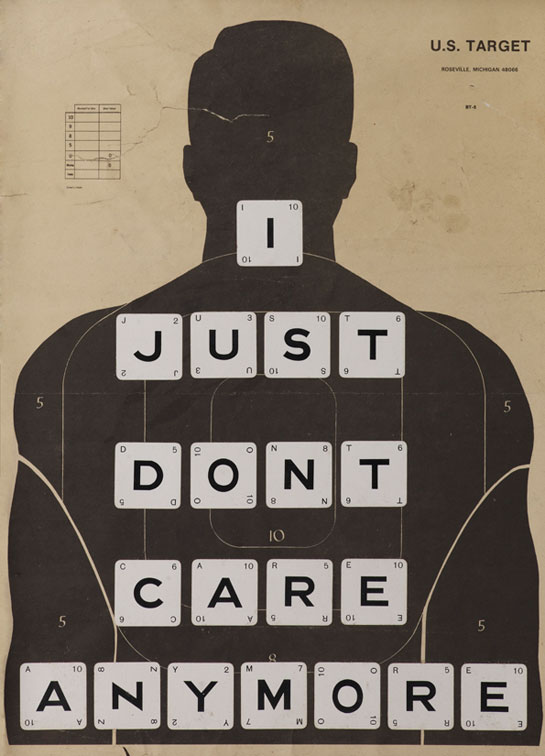
I bet we've all experienced it in one form or another: that feeling that you just don't care anymore right now, that you're tired of fighting, and ready to wave the white flag. I call them the "F-its."
While having this experience is pretty normal, it can also have unfortunate side-effects if it leads to impulsive behavior, or giving in to our worst judgment. For clients trying to change problematic, impulsive, compulsive, or addictive behaviors, the "F-its" create a high risk for relapse. "F-its" may also be more common for people trying to change behaviors, simply because behavior change requires sustained, hard work. It can be draining, and leave little extra energy to cope with life's other challenges. So how do we help clients both reduce, and cope with, the "F-its?"
Reducing the "F-its" is best accomplished by reducing overall vulnerability as much as possible. In addiction treatment, clients are often advised to avoid becoming to Hungry, Angry, Lonely, Tired or Thirsty (HALT). In DBT, clients are taught the acronym "PLEASE MASTER" - to reduce vulnerability, treat PhysicaL illnesses, Eat a balanced diet, avoid Alcohol and drugs, get the right amount of Sleep, Exercise, and do something that gives you a feeling of MASTERy.
Coping with the "F-its" once they occur is a little trickier, for the simple fact that, in that moment, the person doesn't care about coping, or the consequences of not coping. It's only later on, after the "F-its" pass that regret occurs. As a result, recognizing the "F-its" as they're creeping up on you, and responding early is crucial to effective coping. The best response that I've found for that moment is to find ways to rest from the hard work of change. Improving the moment is one set of strategies for giving oneself a break. Distraction, enjoyable activities (other than the problem behavior), socialization, and sensory self-soothing are other examples.
"F-its" can be tackled from cognitive and motivational angles. Cognitively, there is often a train of thought contributing to the "F-its" (for example, "I shouldn't have to work this hard to be normal," "I'm tired of this," "I was better off before," "who cares if I ____ anyway?"), and leading from the "F-its" to action via the road of justification ("just this once," "nobody will notice or care," "I'll get back on the wagon tomorrow," etc.). CBT can be used to identify and challenge these thoughts. At the same time, alternative thoughts supporting efforts to cope can be brought out by helping clients to re-focus on what motivated them to change in the first place.
Finally, normalizing the "F-its," and helping clients regroup and get back on track after behavioral slips is crucial, to prevent a slip from becoming a full relapse.
What do you do to help clients get through the "F-its" without derailing their recovery process?
While having this experience is pretty normal, it can also have unfortunate side-effects if it leads to impulsive behavior, or giving in to our worst judgment. For clients trying to change problematic, impulsive, compulsive, or addictive behaviors, the "F-its" create a high risk for relapse. "F-its" may also be more common for people trying to change behaviors, simply because behavior change requires sustained, hard work. It can be draining, and leave little extra energy to cope with life's other challenges. So how do we help clients both reduce, and cope with, the "F-its?"
Reducing the "F-its" is best accomplished by reducing overall vulnerability as much as possible. In addiction treatment, clients are often advised to avoid becoming to Hungry, Angry, Lonely, Tired or Thirsty (HALT). In DBT, clients are taught the acronym "PLEASE MASTER" - to reduce vulnerability, treat PhysicaL illnesses, Eat a balanced diet, avoid Alcohol and drugs, get the right amount of Sleep, Exercise, and do something that gives you a feeling of MASTERy.
Coping with the "F-its" once they occur is a little trickier, for the simple fact that, in that moment, the person doesn't care about coping, or the consequences of not coping. It's only later on, after the "F-its" pass that regret occurs. As a result, recognizing the "F-its" as they're creeping up on you, and responding early is crucial to effective coping. The best response that I've found for that moment is to find ways to rest from the hard work of change. Improving the moment is one set of strategies for giving oneself a break. Distraction, enjoyable activities (other than the problem behavior), socialization, and sensory self-soothing are other examples.
"F-its" can be tackled from cognitive and motivational angles. Cognitively, there is often a train of thought contributing to the "F-its" (for example, "I shouldn't have to work this hard to be normal," "I'm tired of this," "I was better off before," "who cares if I ____ anyway?"), and leading from the "F-its" to action via the road of justification ("just this once," "nobody will notice or care," "I'll get back on the wagon tomorrow," etc.). CBT can be used to identify and challenge these thoughts. At the same time, alternative thoughts supporting efforts to cope can be brought out by helping clients to re-focus on what motivated them to change in the first place.
Finally, normalizing the "F-its," and helping clients regroup and get back on track after behavioral slips is crucial, to prevent a slip from becoming a full relapse.
What do you do to help clients get through the "F-its" without derailing their recovery process?
Monday, February 6, 2012
Facing Disappointments
The day after the Patriot's disappointing 4th quarter loss to the Giants in the Super Bowl seems like a good occasion to think about disappointment. Disappointment is perhaps one of the most common kinds of negative emotion. It happens when our hopes don't turn into realities. It happens so often that we tend to discount or dismiss it...but, under the surface, it can contribute to a host of problems that clients bring to therapy.Like all emotions, disappointment serves a purpose. It helps us get our needs met by recognizing which of our desires are healthy and realistic (and which aren't), whom we can count on (and whom we can't), and what is (and isn't) in our control. However, for individuals with depression or low self-esteem, disappointment easily lends itself to cognitive distortions such as: "Nothing ever goes right for me," "nobody cares about me," or "I don't deserve to have good things happen."
The first step in coping with disappointment is to guard against these kinds of distortions, and try as much as possible to keep your thoughts balanced. Recognize that it's normal to feel disappointed sometimes, and that the disappointment is limited to this specific time and circumstance (in other words, don't overgeneralize). Put it in perspective by reminding yourself that other good things will come along (as sports fans say, "There's always next year!"). When in doubt, get someone you trust to serve as a sounding board. If necessary, implement distress tolerance skills.
Once the worst of the disappointment has passed, look back at the situation to see if you might have contributed in some way to the disappointment - for example, through unrealistic expectations, denial, or self-sabotage. If any of these things are present, they are good topics to cover in therapy, especially if they are patterns or habits.
Finally, re-focus on your goals and use your problem solving skills and creativity to figure out what it is you really need, and how you can move in that direction in spite of the disappointment. As the old adage says: "Where there's a will, there's a way!"
(Adapted in part from The Food and Feelings Workbook)
Subscribe to:
Posts (Atom)